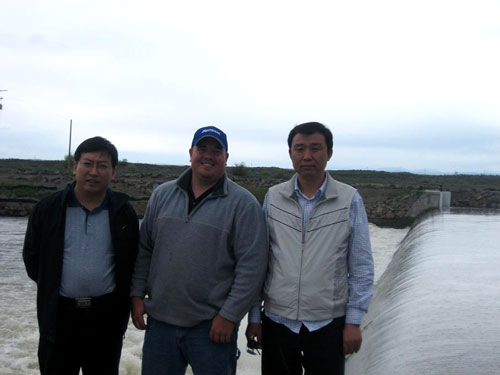
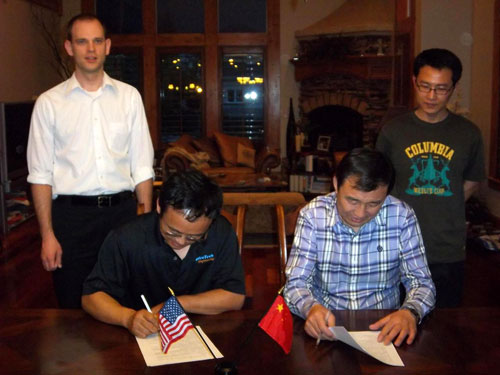
我公司领导在参加完2011世界溢油应急大会后,又同美国客户签订了橡胶坝合同,该合同包括橡胶坝及其自动控制系统的设计、生产制作及后期技术指导安装等。我公司生产的橡胶坝及溢油防治设备技术成熟、制作先进、性能优良,现已出口到日本、韩国、泰国、伊朗、越南、印尼、新加坡、美国、澳大利亚、俄罗斯等几十个国家,深受国内外客户的青睐。
Prev: 张芳海董事长赴美国参加2011年世界溢油应急大会(IOSC)
Next: 青科大党外代表人士“同心 • 促发展” 服务区域经济建设实践基地落户青岛华海环保工业有限公司
Tempered by time, the original aspiration burns like a torch. The rubber dam of Henan Power Station, produced and constructed by Qingdao Huahai Environmental Protection Industry Co., Ltd., has been standing firm along the Luohe River and safeguarding the operation of the power station since its commissioning. With its stable and reliable performance, it has become an important water conservancy supporting barrier for the safe operation and efficient power generation of Henan Power Station. This flexible dam body, having withstood the test of wind and rain, not only undertakes the important mission of water resource regulation, flood control and supply guarantee of the power station, but also demonstrates Huahai Environmental Protection’s ingenuity and responsibility in deeply cultivating the field of water conservancy equipment and empowering the energy industry, providing a solid guarantee for Henan Power Station to achieve "safe, efficient and green" operation.
Recently, the integrated marine oil spill containment and recovery system independently developed by Qingdao Huahai Environmental Protection Industry Co., Ltd. has successfully passed comprehensive inspection by a professional classification society. All performance indicators fully meet relevant standard requirements, and the product has obtained official authoritative certification. This lays a solid foundation for the product to enter broader markets and serve more complex operational scenarios.
Once an oil spill occurs in mountainous areas or ravines, it always poses a tough challenge: narrow roads, steep slopes, and rugged terrain make it impossible for large-scale equipment to access. Conventional oil booms are heavy and difficult to transport. By the time they are finally delivered to the scene, the oil has already spread. In addition, there are limited emergency personnel in remote areas, making rapid deployment and containment even more difficult.